
Why a padlock alone is not enough
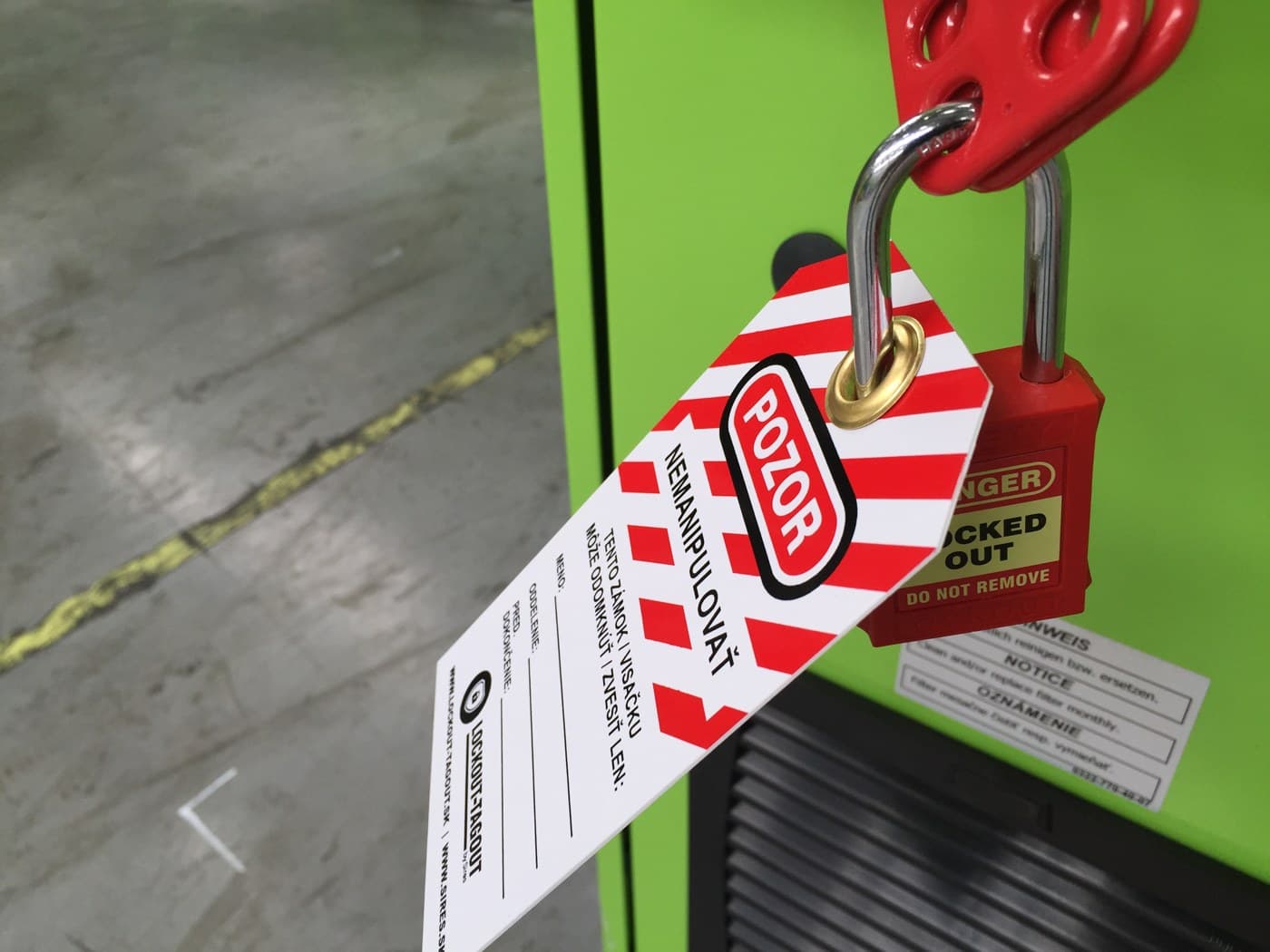
LOTO is not about buying padlocks. It is a system – people, procedures and devices that together make sure a machine cannot start while someone is working on it. We implement it in manufacturing plants from the first site visit to training the last maintenance technician.
Which energies must be secured
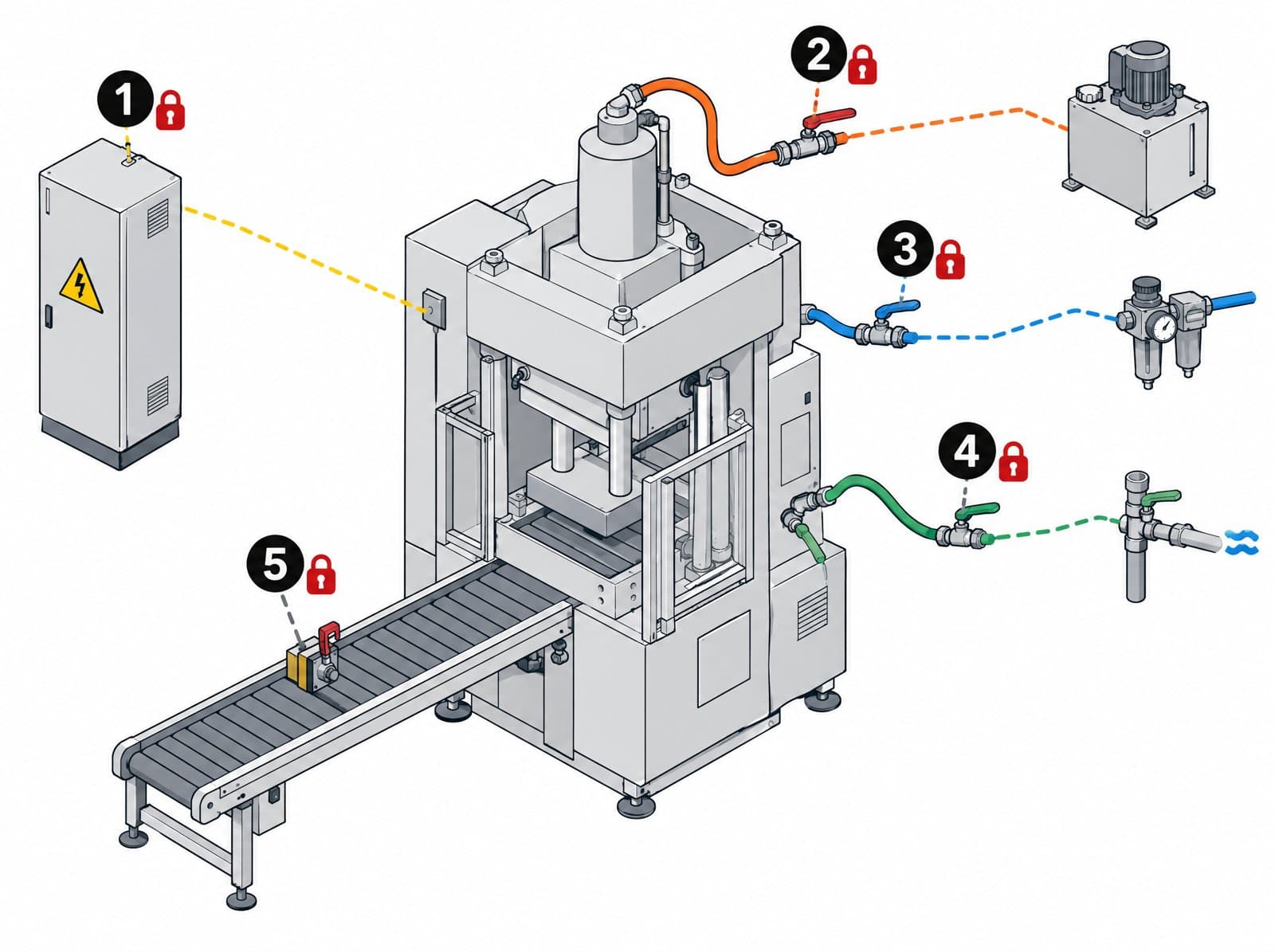
A switched-off main isolator does not make a machine safe. Before any work, every energy source must be identified – including the energy that stays in the machine after it is switched off.
Electrical
Power supply, control circuits, charged capacitors.
Mechanical and kinetic
Rotating and moving parts, flywheels running down after shutdown.
Potential
Gravity, raised loads, tensioned springs, deformed structures.
Hydraulic
Pressure in circuits and accumulators that remains after the pump stops.
Pneumatic
Compressed air in lines and cylinders that can still move a mechanism.
Thermal and chemical
Hot surfaces, steam, chemicals and gases in pipes and vessels.
The principles we build on
- 1
One worker – one padlock
Everyone working on the equipment locks the energy source with their own padlock, even if another lock is already there. For several people, a hasp or group lock box is used.
- 2
Verifying zero energy
After lockout, it is always verified that the machine cannot start and that no residual energy remains. Only then does work begin.
- 3
Only the person who applied the lock removes it
Exceptions follow a clearly defined procedure with named responsible persons. Nobody else removes a lock, not even in good faith.
- 4
The tag informs, the lock protects
The tag says who is working and why. Physical protection comes from the padlock – a tag on its own is not enough.
- 5
Handover at shift change
Responsibility for locked-out equipment is handed over so that it is never unprotected, not even for a moment.
- 6
Same rules for contractors
Contractors and service companies follow the same procedure and have the necessary devices available right at the workplace.
The most common mistakes we see in companies
- One shared padlock or key for the whole maintenance crew.
- A tag without a padlock – “it says not to switch it on”.
- Forgotten residual energy: hydraulic pressure, compressed air, a tensioned spring.
- The procedure exists only on paper, not at the machine where the worker needs it.
- Contractors work without devices and without knowing the plant's rules.
- Training once at induction and never again.
What you get with a turnkey LOTO implementation
Every plant is handled individually. Specific procedures, templates and training materials are tailored to your machines and your people.
Internal LOTO policy
Rules, roles and responsibilities adapted to your company and its processes.
A procedure for every machine
Machine layout with energy sources, isolation points and safe shutdown steps.
Labelling on site
Marked energy sources and isolation points, LOTO instructions and information boards at the machines.
Devices for real needs
Padlocks, hasps, lockout devices and stations selected for the actual isolation points – nothing extra.
Role-based training
Different training for maintenance, operators and contractors – including hands-on practice.
Support after implementation
Refresher training, replacement devices and procedure updates when your technology changes.
Legislation and standards
Employers must ensure that work equipment cannot start unexpectedly during maintenance. In Slovakia this follows mainly from Government Regulation No. 392/2006 Coll. on minimum safety and health requirements for the use of work equipment. Our LOTO implementations also draw on STN EN ISO 14118 (prevention of unexpected start-up) and on proven practice under the US standard OSHA 29 CFR 1910.147. New machinery placed on the market from 20 January 2027 is governed by the EU Machinery Regulation (EU) 2023/1230, which replaces Directive 2006/42/EC – it too requires machinery to have clearly identified, lockable means of isolation from all energy sources.
Want to know what LOTO would look like in your plant?
We will visit your site, go through the machines with you and propose a solution. Specific procedures are prepared only for your plant.